Government’s climate-health plan needs $1.4b over five years: Study
Published: 17 October 2026, 8:40:23
Collected Photo
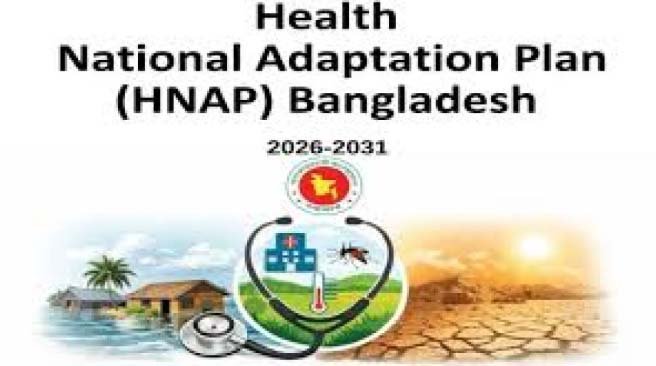
Bangladesh needs $1.4 billion to implement its “Health National Adaptation Plan (HNAP)” for 2026-2031 and address the health risks of climate change, according to a study by BRAC University’s Centre for Climate Change and Environmental Research (C3ER).
The study outlines potential funding sources, including domestic public financing, investments from other sectors, development partner programmes and international climate finance, to support measures addressing extreme heat, climate-sensitive diseases, unsafe water and disruptions to essential healthcare services.
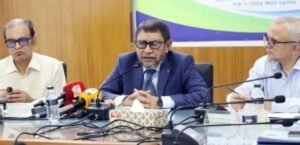
Released on Saturday at BRAC Centre in the capital, the study proposes mobilising $740 million from domestic and cross-sector sources and another $660 million through development partners and international climate-finance channels.
Bangladesh will need Tk17,000 crore, or $1.4 billion, to implement the plan and address the adverse health effects of climate change, said Prof Dr Iqbal Kabir, director of the Centre for Climate Change and Public Health.
Dr Ainun Nishat, emeritus professor at BRAC University and adviser to C3ER, said the growing health burden of climate change must be reflected in the country’s development planning and financing.
He said the HNAP should guide investment decisions across the health, water and infrastructure sectors, with clear responsibilities for ministries and specific budget allocations. International adaptation finance should support these efforts, particularly through grants to protect vulnerable populations.
Domestic and cross-sector sources could provide 53%
The study proposes $380 million from domestic public financing and $360 million through health-related contributions from other sectors. Together, these sources could cover approximately 53% of the plan’s estimated investment requirements.
Domestic financing could come from health budgets, the Annual Development Programme and the Bangladesh Climate Change Trust Fund. Integrating climate resilience into government projects could help finance safer healthcare facilities, workforce preparedness and reliable medical supply chains.
Investments in other sectors could also contribute to reducing climate-related health risks. Improved drainage and sanitation could help prevent disease, while safe water supplies in coastal areas and flood-resilient infrastructure could protect communities and maintain access to healthcare.
The study stresses the need for clear accounting to ensure that only the health-related share of wider investments is counted towards the HNAP, avoiding double-counting.
Development partners and climate funds
Development partners could contribute $520 million, representing around 37% of the total requirement, under the proposed financing framework. The study identifies opportunities to align programmes of the World Bank, UNICEF, the World Food Programme, the World Health Organization and the United Nations Population Fund with the plan’s priorities.
Potential areas of support include resilient healthcare infrastructure, disease surveillance, maternal and child health, nutrition and emergency preparedness.
The proposed financing would include concessional lending and programme support, although contributions would depend on agreements with development partners. Existing funding for other activities cannot automatically be redirected to the HNAP.
The study also proposes mobilising $140 million through international climate-finance channels, including the Green Climate Fund, Adaptation Fund and Least Developed Countries Fund.
Such funding could support early-warning systems for climate-sensitive diseases, heat-health advisories, vulnerability assessments and adaptation measures in coastal and flood-prone communities.
Ahead of COP31, the proposed financing roadmap could help Bangladesh present specific climate-health investment proposals to development partners and international climate-finance institutions. The study highlights the importance of grants for prevention and preparedness measures that protect public health but do not generate revenue.
The proposed financing figures are targets rather than confirmed commitments. Further project preparation would be needed to clarify potential grants, co-financing arrangements and the contributions of individual partners.
Four priorities account for 69% of investment needs
Four components account for $966 million, or 69% of the HNAP’s estimated investment requirements, according to the study.
These include $350 million for resilient and low-carbon infrastructure, technologies and supply chains; $266 million for integrated risk monitoring, early warning and emissions tracking; $210 million for a climate-smart health workforce; and $140 million for leadership and governance.
Proposed measures include upgrading healthcare facilities exposed to floods and coastal hazards, installing solar power systems and strengthening vaccine cold chains to maintain essential services during disasters.
Integrating weather information with disease surveillance could improve outbreak preparedness, while training doctors, nurses and other health workers could strengthen their ability to respond to climate-related health risks.
Stronger coordination needed
The study recommends introducing climate-risk assessments for new health-sector development projects, establishing a dedicated taskforce within the health ministry to develop costed interventions, and introducing specific codes in the government’s iBAS++ accounting system to track climate-health expenditure.
It also proposes coordination through the Economic Relations Division on development partner financing and applications to international climate funds. The Planning Commission could support climate-health assessments and identify the health-related contributions of investments across sectors.
Speakers at the event said Bangladesh had significant opportunities to secure international funding to address climate-related health risks but had been unable to mobilise such resources effectively.
They stressed the need for stronger coordination among the government, private sector and non-governmental organisations, saying blended finance could help address funding challenges in the health sector.
The speakers also called for training healthcare workers, doctors, nurses and pharmacists on climate-related health risks and incorporating these issues into educational curricula.