
Giant ring of glowing plankton outlines deadly underwater structure
Published: 27 May 2026, 1:57:47
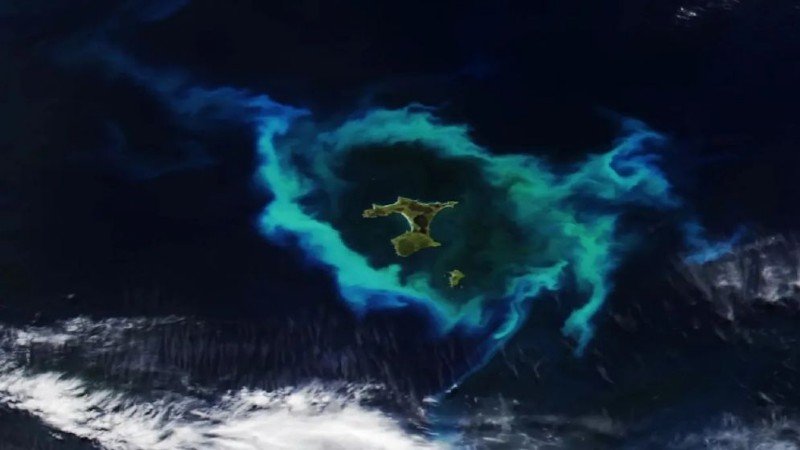
A satellite image captured a stunning ring of phytoplankton that had enough splashes of color to make even the most ambitious fantasy film director blush.
NASA Earth’s Facebook page shared the shimmering halo that formed near the Chatham Islands, some 500-plus miles away from New Zealand’s South Island and the city of Christchurch.
As the post described, satellites can spot microscopic phytoplankton from space when their numbers boom.
LiveScience explained how a shallow, underwater plateau known as the Chatham Rise creates this occasional phenomenon by guiding cold, nutrient-rich waters to the ocean’s surface. In warmer months, seasonal currents intermingle with this nutrient-rich water, creating optimal conditions for algal blooms.
This event was one of the biggest in decades, per LiveScience. While that makes for astounding visuals, Chatham Rise’s lure can be dangerous to numerous animals.
Large groups of cetaceans can lose their bearings in its shallow waters. Once the creatures figure out where they are, it can be too late to avoid getting stuck as the tide goes out, unless humans can step in to save them.
New Zealand’s Department of Conservation revealed an incident in 2022 saw almost 500 pilot whales fall prey to this sort of stranding.
Phytoplankton are an essential food source in the region, playing a role much like plants do on land. While the islands can be dangerous, they also host valuable resources for five seal species and 25 whale and dolphin species, including orcas and sperm whales, per the DOC.
NASA added that pāua, rock lobster, and blue cod are valuable fish that call the island’s waters home, and they are supported by phytoplankton.
The Chatham Islands’ allure and dangers reveal the push and pull that nature’s wonders can have on aquatic species.
One Facebook commenter was understandably wowed by the visuals.
“That color ring is wild,” they wrote. “Science bonus: those bright greens and blues are phytoplankton pigments, and satellites spot them because blooms change how the ocean reflects light.”