
Bangladesh showcases progress in food fortification at int’l forum
Published: 23 May 2026, 12:49:22
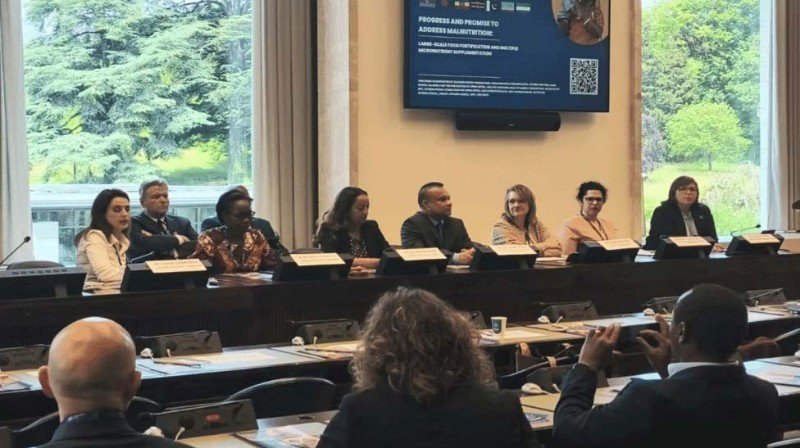
Bangladesh has highlighted its progress, opportunities and ongoing challenges in large-scale food fortification at a high-level international panel discussion held at the Palais des Nations in Geneva, Switzerland.
The event was jointly organised by the Global Alliance for Improved Nutrition (GAIN) and Helen Keller International, bringing together global stakeholders to discuss strategies for combating malnutrition through food fortification.
Speaking at the event, Dr SM Ziauddin Hyder, special assistant on health affairs to Prime Minister Tarique Rahman, said Bangladesh had achieved significant progress in food fortification initiatives over the past decade.
He said the country has already brought salt, edible oil, wheat flour and rice under food fortification programmes. According to him, these initiatives are already showing positive impacts in reducing deficiencies of essential micronutrients such as iron, iodine, vitamin A and zinc among the population.
Ziauddin described large-scale food fortification as one of the most effective, cost-efficient and sustainable approaches to tackling malnutrition, particularly among low-income communities who often lack access to nutritious food.
However, he noted that several major challenges still remain, including gaps in policy coordination, limited institutional collaboration, weaknesses in quality control and monitoring systems, and market-related barriers. He also stressed the importance of strengthening producers’ capacity, increasing consumer awareness and building sustainable market structures.
He said the Bangladesh government remains firmly committed to addressing these challenges by strengthening policy support, enhancing institutional capacity and expanding private sector participation in food fortification programmes.
Ziauddin also highlighted PM Tarique’s recently launched “Family Card” programme, describing it as a new milestone in Bangladesh’s social protection system.
He said incorporating fortified rice, flour and edible oil into the Family Card programme could significantly increase its impact by ensuring that beneficiary families receive not only food assistance but also access to vitamin- and mineral-enriched nutritious food.
According to him, such an initiative would play an important role in improving the nutrition of children, women and vulnerable populations, while also helping build a healthier and more productive society in the long term.
Ziauddin expressed hope that coordinated efforts among the government, development partners, the private sector and international stakeholders would enable Bangladesh to achieve greater success in food fortification and establish itself as a global example in combating malnutrition.