Farakka Barrage now a ‘death trap’ for Bangladesh: LGRD Minister
Published: 15 May 2026, 6:16:46
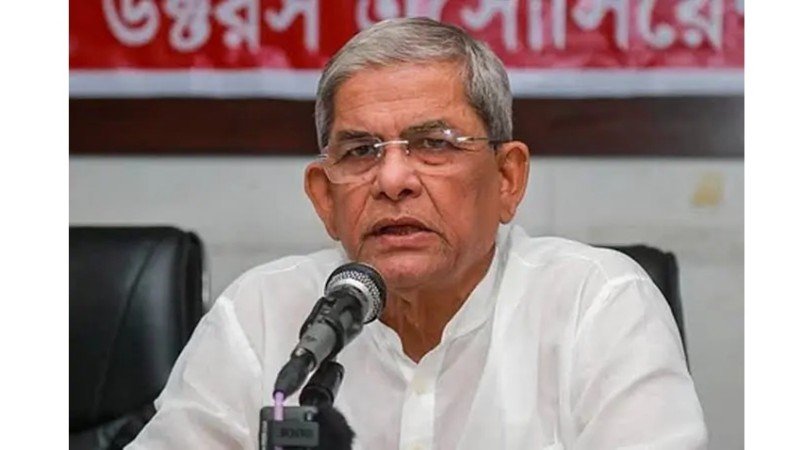
BNP Secretary General and Local Government, Rural Development and Co-operatives (LGRD) Minister Mirza Fakhrul Islam Alamgir has alleged that the then Awami League government allowed India to operate the Farakka Barrage on an experimental basis ignoring biodiversity and environmental risks, and that the project has now turned into a “death trap” for Bangladesh.
He made these remarks in a message issued on Friday marking the “Historic Farakka Day,” signed by BNP Assistant Office Secretary Muhammad Munir Hossain.
Fakhrul said May 16 remains a historic and significant day in country’s political history. He recalled that 49 years ago, under the leadership of Maulana Abdul Hamid Khan Bhashani, hundreds of thousands of people joined a historic long march towards Farakka demanding Bangladesh’s fair share of the Ganges water in line with international law.
He said India began unilateral withdrawal of water from the common river by constructing the Farakka Barrage at the Farakka point of the Ganges, causing severe environmental imbalance in Bangladesh’s northwestern region.
“The northwestern part of the country has nearly turned into a desert due to water deprivation and ecological imbalance,” Fakhrul said.
He added that Maulana Bhashani had organised the historic march to protest the water withdrawal and draw international attention to the issue, fearing humanitarian and environmental disasters.
The BNP leader also claimed that the Farakka Barrage subsequently became an important international issue due to concerns over its humanitarian impact.
Fakhrul further alleged that India has continued constructing dams on the 54 transboundary rivers shared with Bangladesh without regard to international laws and conventions, withdrawing water unilaterally in a way that threatens Bangladesh’s existence.
“Signs of Bangladesh gradually turning into barren land are already visible,” he said.