MP Rumeen Farhana tears into govt over fuel crisis denial
Published: 27 May 2026, 2:23:57
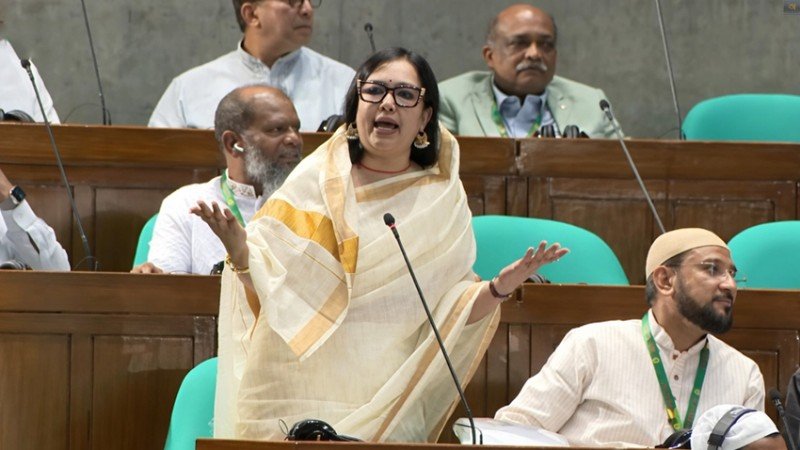
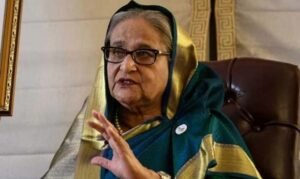
Independent lawmaker Rumeen Farhana delivered a blistering attack on the government in parliament on Sunday, accusing it of persistently denying a fuel shortage that millions of citizens have been experiencing firsthand, with motorists queuing for kilometres outside filling stations well into the night.
Speaking during an urgent public attention debate under Rule 71, Farhana, elected from Brahmanbaria-2, invoked Nobel laureate Rabindranath Tagore to describe the government’s belated decision to raise fuel prices. “Kadambari through her death proved that she was not dead,” she quoted, drawing a sharp parallel to a government that, in her view, had finally acknowledged a crisis only after refusing to admit one for weeks.
“Before that, we saw long queues spanning several kilometres. Drivers are standing until midnight and are not getting fuel. But the government is not budging,” she told the House.
Farhana, a former BNP lawmaker, took direct aim at ministers who had repeatedly stood before parliament to insist there was no fuel shortage in the country. “But Honourable Speaker, when you go to buy fuel, you see a three-kilometre long queue,” she said.
She questioned the logic of emergency measures the government had recently announced, including a directive to close marketplaces by 7pm. “Whatever shopping is done, it is done after the evening, not before,” she said pointedly. She also raised concerns about proposals to cut office working days from five to four or three, arguing that such steps only deepened the contradiction at the heart of the government’s position.
“If there is no fuel crisis, then why are there such long lines? Why do the prices have to be increased? Why do office hours have to be changed? These questions arise, Speaker,” she said.
Farhana pressed the government for transparency, urging the energy minister to publicly disclose the country’s current reserves of octane and diesel, how long those stocks would last, and why fuel pumps were running dry. “When the energy minister speaks to the media, it seems that by the grace of God, there is no crisis in Bangladesh,” she said.
Her speech was repeatedly disrupted by protests from treasury bench members. As she spoke, ruling party MP Zainul Abdin was seen gesturing and speaking out of turn, and after she concluded, government members broke into loud objections.
The Speaker called for order, saying, “Honourable members, please let us discipline ourselves.”
The conduct drew a formal rebuke from Leader of the Opposition Dr Shafiqur Rahman, who described parliament as the highest institution of honour in the country. He said he was deeply troubled by the behaviour directed at Farhana while she held the floor.
“I noticed that an independent member of parliament, while she was speaking, unfortunately some respected members from the treasury bench made gestures that hurt my conscience. I did not expect this,” he said, noting that some of those involved had been elected to parliament four or five times. He expressed sorrow and condemned the behaviour without naming individuals.
Separately, Jamaat MP Salah Uddin, elected from Gazipur-4, raised the compounding impact of the energy crisis on daily life, telling parliament that residents of Kapasia in Gazipur were enduring ten to twelve hours of load shedding daily. He said medical services were being disrupted, irrigation systems were breaking down during a critical agricultural period, and students preparing for the SSC examinations were struggling without electricity.
Salah Uddin also flagged concerns about procurement corruption within parliament, acknowledging that such problems had existed under previous governments as well, and called for concrete steps to end the practice.