Children victims of ‘special’ authority!
Published: 27 May 2026, 2:25:59

Questions have emerged over the recent surge in measles infections and rising child deaths in the country, with an inquiry suggesting that the crisis is not solely due to vaccine shortages but also linked to controversial policy decisions taken during the tenure of the former interim government.
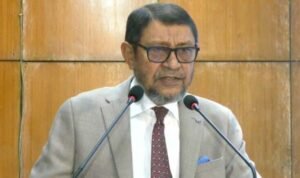
Findings indicate that the situation stems largely from the sweeping authority exercised in the health sector by Professor Dr Sayedur Rahman, Special Assistant to former Chief Adviser Dr Muhammad Yunus. He chaired most meetings of the Directorate General of Health Services (DGHS) in February and March 2025 and strongly pushed for the cancellation of operational plans (OPs) and withdrawal from the sector programme.
Officials had repeatedly warned of risks, including disruption to vaccine supply, funding uncertainty and suspension of staff salaries. However, Dr Rahman reportedly remained firm in his position.
After the interim government assumed office, Health Adviser Nurjahan Begum was widely criticised as an unsuitable choice. Dr Yunus later appointed Dr Sayedur Rahman as Special Assistant with advisory status to help run the ministry, after which he began taking key policy decisions, reportedly sidelining the health adviser.
A senior doctor and political figure, speaking on condition of anonymity, said Dr Rahman effectively acted as a “one-man authority” in the sector, overseeing transfers, postings and major decisions, including the abrupt cancellation of OPs. “His special authority meant few officials dared to speak openly in meetings,” the source said.
Warnings ignored over OP cancellation
A key meeting on 6 March 2025 at the Health Ministry discussed the exit plan for the fifth Health, Nutrition and Population Sector Programme. Minutes of the meeting show that nearly all departments raised concerns about potential disruptions, but these warnings were not reflected in policy decisions.
Officials highlighted unpaid salaries for thousands of workers since July 2024, unpaid bills to suppliers of essential services, and the risk of severe disruption if a new structure was introduced without adequate preparation.
Health officials warned that the sudden removal of personnel working under 14 operational plans would leave a gap that could not be filled by the limited permanent workforce, risking a collapse in service delivery.
Budget officials cautioned that without strengthening vaccine procurement and disease control capacity before exiting the sector programme, a major crisis was likely. Planning officials stressed that even minor disruptions to immunisation could pose serious public health risks.
Representatives also warned that tuberculosis and other infectious disease programmes remained dependent on development partners, and abrupt structural changes could undermine disease control efforts.
Supply chain breakdown and funding risks
Officials reported that hundreds of vehicles procured under the OP system remained in use but had received no funding for fuel, maintenance or drivers’ salaries since July 2024. Concerns were also raised over shortages of staff and operational funds across multiple agencies.
The World Bank warned during the meeting that delays in approving the fifth sector programme could stall hundreds of millions of dollars in funding, potentially causing significant setbacks in the health sector.
While some officials argued that exiting the sector programme might strengthen the system in the long term, they acknowledged that poor coordination and lack of preparation had triggered the current crisis.
Experts warn of ‘reckless’ decision
Health experts have described the decision to abolish the long-standing OP system—considered the backbone of the country’s health and family planning services—as reckless.
Dr Monjur Ahmed, a senior official in the family planning department, said the move led to a breakdown in the supply of life-saving medicines and contraceptives. He noted that supply chain systems now show critical shortages, with no buffer stock of essential items such as pills, injections, implants and IUDs.
He warned that even a one-month disruption in supply could result in significant economic losses, estimating that every dollar lost in supply could translate into a 14-dollar loss in investment.
Immunisation programme severely affected
Dr Rajib Sarkar, Deputy Programme Manager of the Expanded Programme on Immunisation (EPI), said the abrupt cancellation of OPs was a key factor behind the disruption of vaccination activities. The transition to a new funding model without an effective exit plan created a major financing gap.
Measles, one of the most contagious diseases, can spread rapidly, with one infected child capable of infecting 12 to 18 others. While first-dose vaccination is about 85 per cent effective, around 20 percent of children do not receive the second dose, creating a large vulnerable population.
The situation has been further worsened by staff shortages and strikes by field-level health workers, many of whom have gone unpaid for months. Community-level immunisation efforts have been severely disrupted, leaving many children unvaccinated.
Former officials speak out
Former health officials have expressed concern over the abrupt policy shift. Dr ABM Abu Hanif, former Director (Administration) at DGHS, said structural reforms must ensure continuity, warning that sudden decisions disrupt service delivery.
Professor Dr Khayer Ahmed Chowdhury, former Additional Director General (Administration), alleged that the decision to cancel OPs was driven by a unilateral and hasty approach by Dr Sayedur Rahman, compounded by a lack of expertise at the advisory level.
He noted that under the previous system, procurement and administrative processes could be completed quickly, whereas the current open tender system has significantly slowed urgent health service delivery.
Silence from key figures
Attempts to contact Dr Sayedur Rahman for comment were unsuccessful. A close associate said he was not willing to speak at this stage and may issue a formal response after reviewing all relevant documents.
Sources also indicated that senior authorities have instructed officials not to speak to the media for now, with plans to provide a consolidated statement later.
Similarly, former Health Adviser Nurjahan Begum declined to comment, with sources saying she could not clearly recall the events due to illness and the passage of time.