
NHS must replicate ‘stroke care revolution’ for dementia
Published: 11 November 2026, 8:35:49
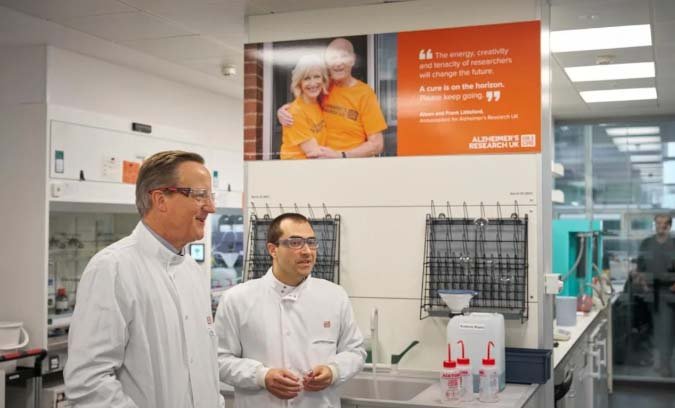
This week Lord Cameron urged the Government to allow new Alzheimer’s drugs on the NHS (Photo & News : Collected)
The NHS must radically redesign services for dementia as it did for stroke care to prepare for a coming revolution in treatment, an eminent specialist has warned.
Prof Jonathan Schott said the health service must diagnose dementia earlier, expand access to specialist tests and overhaul services so patients could benefit from scientific breakthroughs.
Writing for The Telegraph below, the chief medical officer of Alzheimer’s Research UK said dementia services must learn from advances in other areas of neurology.
In stroke care, breakthrough treatments forced a radical rethink of how patients were diagnosed and treated, but took far too long, he said.
His intervention follows calls from Lord Cameron of Chipping Norton, the former prime minister, to end the NHS block on access to drugs that can slow Alzheimer’s disease. Sir Jeremy Hunt, the former health secretary, and Lord Bethell, the former health minister, have also backed the demands.
Prof Schott has joined 47 other leading dementia specialists in demanding five major changes.
These include NHS access to breakthrough Alzheimer’s treatments, a maximum 18-week wait for diagnosis, more opportunities to participate in clinical trials and better support for patients and families.
He said that the NHS needed to do much more to prepare for such changes.
“Discovering treatments and diagnostic tests is of little value if the NHS lacks the staff, scanners, laboratories and pathways needed to use them,” he writes.
Lecanemab and donanemab, the first drugs shown to slow the progression of early Alzheimer’s disease, have been licensed in Britain and are available privately.
However, neither is routinely available on the NHS in England, as rationing bodies deemed that the benefits do not justify the costs.
Talks are ongoing between manufacturers and health officials, who recently wrote to the Health Secretary on the matter.
‘Little urgency’
Prof Schott drew parallels with stroke care, which was once surrounded by “therapeutic nihilism” – the belief that little could be done to help patients.
“When I qualified as a doctor in 1996, stroke was still surrounded by a therapeutic nihilism that now seems extraordinary,” he writes.
“Patients were usually diagnosed on clinical grounds. They might receive a CT brain scan but there was little urgency because there was little that could be done.”
But a landmark trial in 1995 had shown that clot-busting drugs could restore blood flow to the brain and improve recovery, provided treatment was delivered within hours.
The breakthrough forced the NHS to rethink how stroke patients were diagnosed and treated.
Public awareness campaigns taught people to recognise the signs of stroke and “Act Fast”, while specialist stroke units were established, staff trained and national treatment standards introduced.
“A new drug therefore forced the NHS to build a new system,” writes Prof Schott, who is also Professor of Neurology at the UCL Queen Square Institute of Neurology’s Dementia Research Centre.
In London, eight hyperacute stroke units opened in 2010, bringing together specialist doctors, scanners and emergency treatment around the clock.
Deaths fell and hospital stays shortened, while the development of stroke networks paved the way for further advances, including mechanical thrombectomy, in which clots are physically removed from blocked arteries.
Crucially, faster diagnosis and more organised care benefited patients even when they did not receive the breakthrough treatments.
Services ‘must transform’
Prof Schott said Alzheimer’s disease now presented a similar opportunity, with new treatments exposing weaknesses in dementia services which had been tolerated for too long.
“The lesson from stroke is not simply that new treatments can transform services. It is that services must transform if patients are to benefit from new treatments,” he writes.
Prof Schott warned that focusing solely on the cost of the new Alzheimer’s drugs risked overlooking their wider significance.
“Like thrombolysis for stroke, they expose weaknesses in services that have been tolerated for too long,” he says.
Most memory clinics were designed to diagnose established dementia and provide support, rather than identify the biological causes of early symptoms, select patients for treatment and monitor their response.
Only around 2 per cent of people with dementia in the UK could access specialist tests to confirm whether Alzheimer’s was the cause, he said.
But reorganising services around earlier diagnosis and treatment could benefit far more patients than ultimately received the breakthrough drugs, just as had happened with stroke.
Prof Schott said the NHS needed national leadership, sustained funding and coordinated regional networks, rather than leaving individual hospitals and memory clinics to develop services independently.
“It cannot be achieved by leaving individual hospitals and memory clinics to develop capacity independently. Nor can it wait another 15 years,” he writes.
The warning reflects the time it took for London’s hyperacute stroke units to open following the landmark trial which demonstrated the benefits of clot-busting drugs.
Prof Schott welcomed the Government’s investment in dementia research, including a £48m public-private partnership to accelerate research and improve access to clinical trials.
But he warned that investment in research could not substitute for investment in clinical services.
He also raised concerns about the Government’s forthcoming Modern Service Framework for Frailty and Dementia, warning that the two conditions should not be conflated.
“Dementia and frailty are not synonymous,” he says. “Many people with early Alzheimer’s disease are otherwise healthy, active and independent.”
He warned that placing dementia too firmly within a frailty framework risked perpetuating a system focused on managing established decline rather than treating disease before substantial impairment developed.
New blood tests could make early and accurate diagnosis more widely available, while trials were already investigating whether treating Alzheimer’s before symptoms emerged could prevent or delay cognitive decline.
A Department of Health and Social Care spokesman said: “Alzheimer’s is a devastating disease, and we are taking action to tackle it through improved research, care and treatment.”
The department highlighted its £33m investment in the Dame Barbara Windsor Dementia Goals programme, as well as its plans for a frailty and dementia service framework and national dementia tsar.