LDC graduation extension major diplomatic success: Humaiun
Published: 01 November 2026, 8:26:18

File Photo
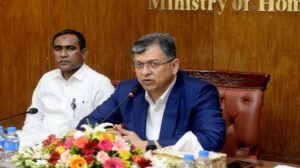
Acting foreign minister Humaiun Kobir on Sunday described the three-year extension of Bangladesh’s graduation timeline from the Least Developed Country (LDC) category as a major diplomatic success achieved under Prime Minister Tarique Rahman’s leadership.
“The extension of the LDC graduation timeline is an important diplomatic success for Bangladesh. This achievement has been secured within just eight months of the formation of the government under the able leadership of Prime Minister Tarique Rahman,” he said.
“We have successfully convinced the United Nations and the international community of the necessity of this extension,” Kobir told BSS during a telephone conversation ahead of his participation in the Commonwealth Heads of Government Meeting (CHOGM) in Antigua and Barbuda.
Kobir is leading the Bangladesh delegation to the four-day Commonwealth summit, scheduled for 1 to 4 November, in his capacity as cabinet minister.
The United Nations General Assembly approved a three-year extension of the LDC graduation preparatory period for Bangladesh and Nepal at a plenary meeting in New York on 29 October.
The decision extends Bangladesh’s preparatory period for graduation from the LDC category until 24 November 2029, providing additional time to strengthen economic resilience, consolidate reforms and prepare for a smooth transition.
At the outset, Uruguay’s representative, speaking on behalf of the Group of 77 (G-77), introduced a draft resolution seeking a three-year extension of the LDC graduation timelines for Bangladesh and Nepal.
The proposal was adopted without objection from any member state.
Representatives of France, Canada and Ireland, the latter speaking on behalf of the European Union, expressed support for extending the preparatory periods for the two countries.
Following its assumption of office in February this year, the BNP-led government formally sought a three-year extension of Bangladesh’s scheduled LDC graduation timeline.
In its submission, Bangladesh argued that additional time was essential to create the necessary policy space for stabilising the macro economy, consolidating ongoing reforms and implementing priority measures under the Smooth Transition Strategy (STS).
The government also maintained that the original five-year preparatory period had been severely disrupted by successive domestic and international crises, affecting the country’s ability to undertake essential transition-related reforms.
The extension is expected to provide Bangladesh with greater flexibility to address structural economic vulnerabilities, strengthen export competitiveness and prepare for the gradual withdrawal of international support measures associated with LDC status.
Earlier, on 21 July, the United Nations Economic and Social Council (ECOSOC) recommended that the General Assembly consider Bangladesh’s request for an extension of its graduation preparatory period.
The recommendation followed a review by the United Nations Committee for Development Policy (CDP), which concluded that the requests submitted by Bangladesh and Nepal warranted consideration by the General Assembly.
Acting on the CDP’s assessment, ECOSOC subsequently referred the matter to the General Assembly for a final decision.
The UN approval marks a significant development in Bangladesh’s LDC graduation process, allowing the country additional time to strengthen its economic foundations and pursue a sustainable transition to developing-country status.