B’desh cannot ensure sustainable Rohingya repatriation alone : Home minister
Published: 11 October 2026, 9:50:39
Collected Photo
Home Minister Salahuddin Ahmed has said Bangladesh’s efforts alone are insufficient to ensure the sustainable repatriation of forcibly displaced Myanmar nationals, stressing the need for a coordinated regional alliance involving China, ASEAN, the United Nations, Japan and other stakeholders.
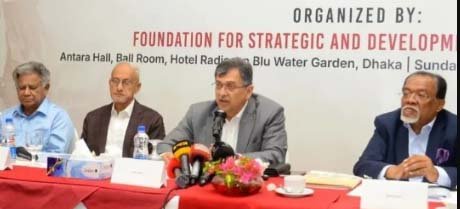
He made the remarks as the chief guest at a seminar on the Rohingya crisis organised by the Foundation for Strategic and Development Studies (FSDS) at the Radisson Blu Water Garden Hotel in Dhaka on Sunday.
The seminar was chaired by FSDS Chairman Major General (retd) Fazle Elahi Akbar. Mohammad Ismail Zabiullah, adviser to the prime minister on the Ministry of Public Administration, attended as a special guest.
Salahuddin said Bangladesh remained committed to the safe, voluntary, dignified and sustainable return of forcibly displaced Myanmar nationals to their homeland. He said coordinated regional and international diplomatic efforts were being strengthened to achieve that goal.
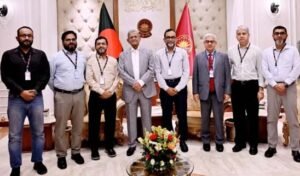
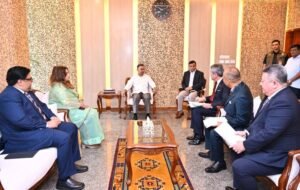
The minister said Sasakawa, Japan’s special envoy for national reconciliation in Myanmar and chairman of the Nippon Foundation, had recently visited Bangladesh. During the visit, the prime minister and the home minister held detailed discussions with him on repatriation, and the Japanese government assured Bangladesh of its full cooperation.
He added that the prime minister was scheduled to visit Japan later this month, where further discussions would be held on accelerating the repatriation process.
Referring to the changing geopolitical and security situation in Rakhine State, Salahuddin said the Arakan Army controlled a substantial part of the territory alongside the Myanmar government. Bangladesh was therefore exploring possible solutions through various diplomatic channels, including informal contacts.
He said peaceful repatriation remained the primary objective and that Bangladesh would continue diplomatic dialogue while keeping all options open as a last resort.
Speaking as a special guest, Public Administration Adviser Ismail Zabiullah said the Rohingya crisis was not merely a humanitarian or bilateral issue, but was closely linked to national interests, regional stability and international geopolitics.
Considering the crisis’s growing complexity and Myanmar’s changing political and military landscape, he called for a shift from crisis management to strategic diplomacy, from temporary relief to sustainable repatriation, and from fragmented initiatives to a coordinated national strategy.
He also stressed the need to protect Rohingya refugees’ humanitarian rights and security while increasing international pressure on Myanmar to ensure their safe and dignified return.
Speaking to journalists after the seminar, Salahuddin said Bangladesh’s representative being elected president of the United Nations General Assembly this year had created an opportunity to raise the repatriation issue more strongly before the international community.
He expressed hope that discussions with international partners, including China, Japan, India, the United States and the European Union, would help establish a path towards sustainable repatriation.
Three papers were presented at the seminar. Professor Dr ASM Ali Ashraf discussed the changing political and security landscape in Myanmar and Rakhine. Professor Shahab Enam Khan presented a paper on development, connectivity and repatriation in Rakhine, while Brigadier General (retd) Shafayat Ahmad outlined regional diplomacy and Bangladesh’s strategic options.
During discussions, speakers stressed that repatriation meant more than the physical return of people. A sustainable solution would require security, citizenship, housing, livelihoods and acceptance by local communities for those returning to their homeland.
The seminar was attended by diplomats, representatives of international organisations, retired military officers, researchers, academics and media representatives from home and abroad.