Sheikh family escapes arrest, many AL leaders still behind bars
Published: 06 August 2026, 3:32:29
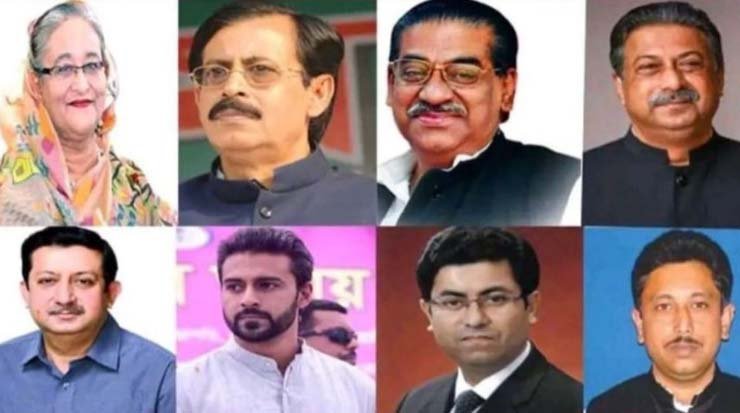
Photo: Collected
After the fall of Sheikh Hasina’s government, an audio recording of a phone conversation between her and former Dhaka South City Corporation (DSCC) mayor Sheikh Fazle Noor Taposh circulated widely on social media. In the call, made by Taposh on the morning of 3 August 2024, he told Sheikh Hasina that he had planned to travel to Singapore but had been stopped by immigration authorities at the airport. Seeking her intervention, he asked, “May I go?” Sheikh Hasina replied, “Yes, go. Why wouldn’t you go?” before the two exchanged a few more words.
The call, placed at 8:16am, came amid one of the most volatile phases of the student-led movement. By then, hundreds of people had already been killed in the nationwide protests. A day earlier, thousands of university teachers, students, cultural activists, lawyers, development workers, human rights defenders and professionals had joined the anti-government “Drohojatra” (March of Defiance) in Dhaka.
Later that day, 3 August 2024 became a defining moment in the July Mass Uprising. Addressing a massive rally at the Central Shaheed Minar, Anti-Discrimination Student Movement coordinator Nahid Islam announced the One-Point demand for the government’s removal, transforming the quota reform movement into a full-scale anti-government campaign. Earlier that morning, opposition reportedly emerged within the Army during a darbar at Army Headquarters over the use of force against protesters.
Despite the government’s collapse, the key members of the Sheikh family avoided arrest. During Sheikh Hasina’s uninterrupted 15-and-a-half years in power, nearly two dozen relatives held influential positions as ministers, members of parliament or senior party leaders.
Among them, only Moin Uddin Abdullah, son of Sheikh Hasina’s paternal cousin Abul Hasanat Abdullah, was arrested in Dhaka in October 2024. A businessman with limited political involvement, he had reportedly not gone into hiding.
Most other members of Sheikh Hasina’s family left Bangladesh before or after the government’s fall. According to relevant sources, the majority are now in India, with photos and videos periodically appearing on social media showing some of them residing in upscale residential buildings in Kolkata.
All key members of Hasina’s family were already abroad or left safely
When Sheikh Hasina resigned and fled Bangladesh on 5 August 2024, she was accompanied by her younger sister, Sheikh Rehana, who had reportedly returned from the United Kingdom just two days earlier.
A permanent UK resident, Rehana had frequently accompanied Hasina at official events and state visits during the Awami League’s 15-and-a-half years in power. After leaving Bangladesh, she has reportedly divided her time between India and London while staying out of the public eye.
Also accompanying Hasina was her defence adviser and Rehana’s brother-in-law, Tarique Ahmed Siddique. In the disputed 2024 general election, eight members of parliament were elected from among Hasina’s relatives.
Hasina’s son, Sajeeb Wazed Joy, was already living in the United States before the government’s fall. During his mother’s tenure, he regularly visited Bangladesh and served as her ICT adviser. Reports later suggested he travelled to India to meet Hasina.
Her daughter, Saima Wazed (Putul), was serving as Regional Director of the WHO South-East Asia Region in New Delhi when the government collapsed. Although the WHO placed her on indefinite leave in July 2025, she has reportedly remained in the Indian capital.
Sheikh Rehana’s son, Radwan Mujib Siddiq (Bobby), who oversaw the Awami League’s research wing, the Centre for Research and Information (CRI), was reportedly in Thailand when the government fell. He had played an active role in the party’s political activities after previously working on the Prime Minister’s Office’s Access to Information (a2i) project.
Rehana’s daughters, Tulip Siddiq and Azmina Siddiq Ruponti, are British citizens. Tulip is a member of the UK Parliament, while Ruponti has largely remained outside politics and made only infrequent visits to Bangladesh.
In the controversial “Me and Dummy” election of 2024, eight members of parliament were elected from among Sheikh Hasina and her relatives. Sheikh Hasina’s relatives who became MPs included her paternal cousins Sheikh Fazlul Karim Selim and Abul Hasanat Abdullah, her first cousins Sheikh Helal Uddin and Sheikh Salahuddin Jewel, Sheikh Helal’s son Sheikh Tonmoy, and her paternal cousins’ sons Noor-E-Alam Chowdhury and Mujibur Rahman Chowdhury (Nixon Chowdhury).
Another of Sheikh Hasina’s paternal cousins, Abul Khair Abdullah, was the mayor of Barishal City Corporation. Sheikh Fazle Shams Parash, the son of Sheikh Hasina’s paternal cousin, served as chairman of the Jubo League. In addition, other relatives held important positions in the Awami League and its associate organisations.
Sheikh Fazlul Karim Selim, a member of the Awami League Presidium and a member of parliament, remained in the country during the student-public movement. After the fall of Sheikh Hasina’s government, he went into hiding. According to information from relevant sources, he left for India in September 2024 and is now in Kolkata.
Sheikh Selim’s son and Jubo League Joint General Secretary Sheikh Fazle Naeem has also gone to Kolkata. Several leaders of the organisation said that he remains in regular contact with Jubo League leaders and activists in Bangladesh.
Sheikh Selim’s other son is Sheikh Fazle Fahim, a former president of the FBCCI. According to Awami League leaders, he left the country before the fall of Sheikh Hasina’s government.
Sheikh Fazle Shams Parash, chairman of the Jubo League, is the elder son of the late Sheikh Fazlul Haque Moni. He had returned to Bangladesh from Canada in the week before the fall of the government. He delivered speeches at various programmes aimed at resisting the student-public uprising. On the day the government fell, he was in Dhaka. According to a relevant source, Parash left for Canada via India a few days later. He has since returned to India.
Sheikh Fazlur Rahman Maruf, another of Sheikh Hasina’s paternal cousins, was not particularly prominent in politics. It is learned that he is now in Singapore.
Abul Hasanat Abdullah, Sheikh Hasina’s paternal cousin, was highly influential. According to relevant sources, he left for India before the fall of Sheikh Hasina’s government. He frequently visited the Ajmer Sharif Dargah in Rajasthan, India. One of his daughters lives there. His daughter is married to an Indian citizen.
According to multiple sources, Abul Hasanat Abdullah owns various assets in India, including a restaurant. His son, Ashiq Abdullah, also went to India with him.
Sadiq Abdullah, the elder son of Abul Hasanat Abdullah, is the former mayor of Barishal City Corporation. His father was the president of the Barishal district unit of the Awami League, while Sadiq was the general secretary of the Barishal city unit of the party. Together, the two controlled politics across the entire Barishal region.
Sadiq Abdullah was active in suppressing the student-people movement in Barishal. According to relevant sources, he later left the country, travelling to the United States via India. He holds US citizenship. After the fall of Sheikh Hasina’s government, angry protesters set fire to Sadiq Abdullah’s house in Barishal.
Abul Khair Abdullah, Sheikh Hasina’s paternal cousin, was the mayor of Barishal City Corporation when the Awami League government fell. It is learned that he went to India after the fall of the government.
Sheikh Hasina’s two influential first cousins, Sheikh Helal Uddin and Sheikh Salahuddin Jewel, were in the country during the student-people movement. They later went to India. They are reportedly living in an upscale residential complex in the New Town area of Kolkata.
Sheikh Tonmoy, the son of Sheikh Helal, is also in India. Shahana Yasmin Shampa, the wife of Sheikh Salahuddin Jewel, is there with him. Awami League leaders say that Shampa was often seen beside Sheikh Hasina at the Gonobhaban.
Another brother of Sheikh Helal, Sheikh Sohel, was a director of the Bangladesh Cricket Board (BCB). He controlled tenders for development projects in Khulna. He is currently in hiding. However, Awami League leaders could not confirm where he is.
Noor-E-Alam Chowdhury (Liton Chowdhury), the son of Sheikh Hasina’s paternal cousin, served as the Chief Whip of parliament. His brother, Nixon Chowdhury, was a Jubo League leader and an independent member of parliament. Both went into hiding after the fall of Sheikh Hasina. According to relevant sources, they are currently in India.
Party sources in the Awami League said that many members of Sheikh Hasina’s family entered India through the Satkhira border. Some also crossed through the Sylhet and Mymensingh borders.
According to the relevant sources, they were able to leave the country by using their political influence, administrative connections and vast financial resources. While Sheikh Hasina’s relatives managed to leave the country safely, a large number of party leaders and activists could not. Many leaders and activists within the party have reacted internally over the issue.
Former ministers, MPs and central leaders arrested
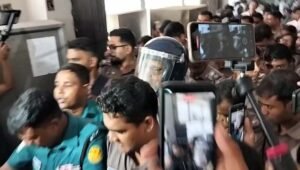
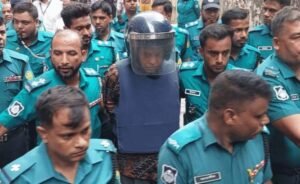
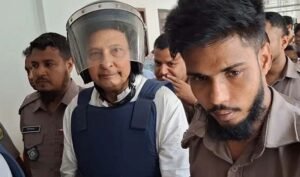
After the fall of Sheikh Hasina’s government on 5 August 2024, a large number of former Awami League ministers, state ministers, deputy ministers, MPs, and central leaders were arrested in different parts of the country. Among them were nearly three dozen former ministers and state ministers and more than 50 former MPs.
Of them, Engineer Mosharraf Hossain and Dabirul Islam died after being released on bail. Former Water Resources Minister Ramesh Chandra Sen died in Dinajpur District Jail, while former Industries Minister Nurul Majid Mahmud Humayun died while undergoing treatment at Dhaka Medical College Hospital. After the fall of the Awami League government, Matia Chowdhury, a member of the party’s Presidium, also died.
Among the central leaders currently in prison are Kazi Zafar Ullah, Md Abdur Razzaque, Muhammad Faruk Khan, Shajahan Khan, Kamrul Islam, Dipu Moni, Ahmed Hossain, and Abdus Sobhan Golap. Also in prison are Sheikh Hasina’s adviser Salman F Rahman, former Law Minister Anisul Huq, and former State Minister Zunaid Ahmed Palak.
Political writer and researcher Mohiuddin Ahmed told the media that Sheikh Hasina had two favourite things: power and favouritism towards her extended family.
According to him, she had made every possible effort to cling to power. After failing to do so, she helped members of her extended family flee to safety.
Mohiuddin Ahmed further said that the Awami League’s uninterrupted 15-and-a-half years in power had turned into family rule. During that period, members of the extended family, some businesspeople and office-holders enjoyed the greatest benefits.
Party workers and supporters were used as cannon fodder, and this could be repeated in the future, he added.
Source: Prothom Alo