
Japan’s LNG trade exposes Bangladesh to economic, environmental risks: Report
Published: 17 June 2026, 1:35:46
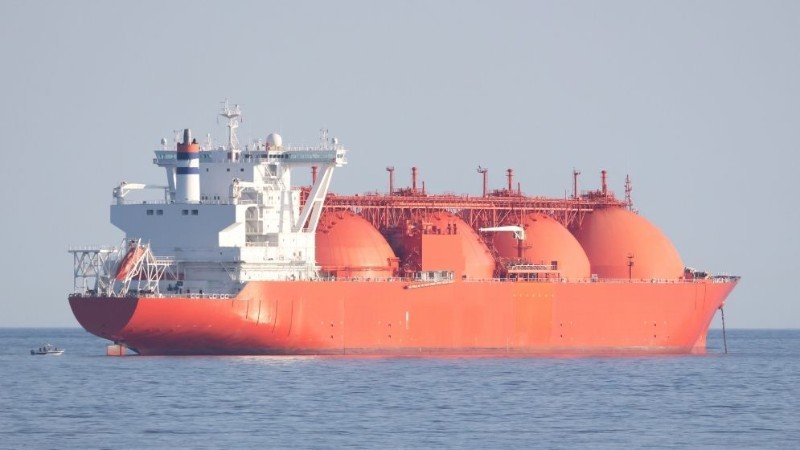
Bangladesh’s growing dependence on liquefied natural gas (LNG) supplied through Japan is exposing the country to long-term economic and environmental risks, including vulnerability to global energy price volatility and rising greenhouse gas emissions, according to a report by international research group Zero Carbon Analytics (ZCA).
The report, released on Tuesday in London, said Japan, one of the world’s largest LNG traders, imports liquefied gas from the United States and resells it to countries across Asia, including Bangladesh.
According to the study, Japan resold around 16.5 billion kilograms of US-produced LNG to nine Asian countries — Bangladesh, India, Pakistan, China, South Korea, Taiwan, Thailand, Singapore and Malaysia — between 2020 and 2025.
The full supply chain, from gas extraction and liquefaction in the US to shipping, regasification and combustion in power plants, generated an estimated 63.5 billion kilograms of carbon dioxide emissions, equivalent to the annual emissions of around 17 coal-fired power plants, the report said.
The findings come as Bangladesh continues to expand LNG imports and strengthen energy cooperation with Japan to meet rising electricity demand amid global fuel and price uncertainties.
The analysis said Japan has emerged as a major LNG trading hub, consistently reselling more US LNG to foreign buyers than it imports for domestic use since 2021. Between 2021 and 2025, Japan’s LNG resales exceeded its domestic consumption by about 77%.
Researchers warned that the growing LNG trade could deepen fossil fuel dependence in Asia at a time when countries are under increasing pressure to reduce emissions and expand renewable energy.
Khondaker Golam Moazzem, research director at the Centre for Policy Dialogue (CPD), said Japan has become a key driver of LNG expansion in Bangladesh through fuel supply arrangements, infrastructure investment and broader economic cooperation.
“During the recent Middle East crisis, Bangladesh’s energy security came under severe pressure, prompting the country to seek financial support from development partners, including Japan,” he said.
He said under the Bangladesh-Japan Economic Partnership Agreement signed in February this year, Bangladesh agreed to import LNG from Japan duty-free, while Japanese companies are showing increasing interest in the country’s energy sector.
Moazzem cautioned that such developments could lead to greater investment in LNG infrastructure, increasing Bangladesh’s dependence on imported fossil fuels and creating debt pressures in the long run.
The report comes amid rising LNG prices caused by geopolitical tensions in the Middle East, adding pressure on energy-importing Asian economies.
It said LNG, which is mainly composed of methane, contributes significantly to climate change, with methane being far more potent than carbon dioxide over a 20-year period. Around 30% of total emissions from the LNG supply chain come from methane leaks during production, processing and transportation, according to the analysis.
The International Energy Agency (IEA), in its 2026 Global Methane Tracker, said methane emissions from fossil fuel operations remain close to record levels and stressed that reducing methane leaks is among the fastest ways to improve climate outcomes and energy security.
Yu Sun Chin, Asia regional researcher at ZCA, said Asia is currently absorbing about one-third of Japan’s surplus LNG exports.
“Our calculations of full lifecycle emissions show that LNG resales pose a significant risk for a region already highly vulnerable to extreme weather and climate impacts,” she said, adding that shifting from fossil gas to renewable energy would provide a more secure and sustainable energy pathway.
Sam Reynolds, Asia LNG research lead at the Institute for Energy Economics and Financial Analysis (IEEFA), said Japanese firms are increasingly seeking overseas buyers as domestic demand declines.
“This strategy risks locking developing countries into expensive and volatile fuel dependence for decades while slowing the transition to renewable energy,” he said.
The report warned that expanding LNG infrastructure across Asia could undermine global efforts to limit temperature rises to 1.5 degrees Celsius, a threshold scientists consider crucial to avoiding the most severe impacts of climate change.
For climate-vulnerable countries such as Bangladesh, the findings raise questions over how to balance immediate energy security needs with long-term sustainability and economic resilience.