Peter Mandelson failed UK Foreign Office vetting
Published: 27 May 2026, 2:30:32
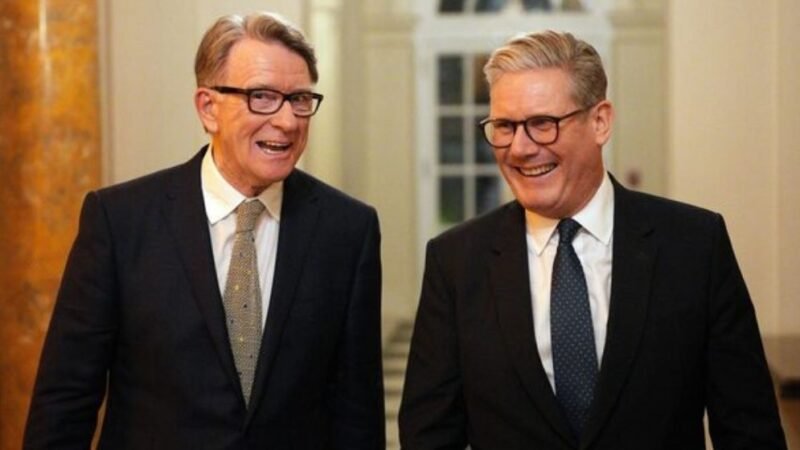
UK Prime Minister Keir Starmer has been accused of misleading parliament after it emerged that Peter Mandelson was made Britain’s ambassador to the US despite having failed to clear security vetting.
The New Labour grandee had already been announced by the prime minister as the UK’s most senior diplomat in Washington in December 2024 before he went through the usual security checks.
Following the developed vetting process in January 2025 — the secret background checks carried out by security officials — he was denied clearance, according to people close to the situation.
The Foreign Office overrode the recommendation from officials at UK Security Vetting, a division of the Cabinet Office, and Mandelson’s appointment went ahead.
The failed vetting was first reported by the Guardian. A person close to Mandelson said that the former ambassador had absolutely no previous knowledge of the matter.
Starmer now faces questions over why he previously claimed that the vetting process had given Mandelson “clearance for the role”. He told parliament three times last September that “full due process” was followed.
“If he has misled Parliament, as it looks like he has, he should resign,” said Kemi Badenoch, the Conservative leader.
Ed Davey, leader of the Liberal Democrats, said that if the prime minister had misled parliament, “he must go”.
Reform UK and the Greens both called for Starmer to resign.
It is not yet known whether Starmer knew about the security vetting decision or why Mandelson failed the checks. UKSV decisions can be overridden by departments but are almost always enforced.
One ally of Starmer said it was “inconceivable” that the prime minister would have gone ahead with the appointment if he had been told about any vetting failure. “If he had known this, he would have pulled the appointment.”
Mandelson only spent seven months as ambassador before he was sacked last September over his long-lasting friendship with convicted sex offender Jeffrey Epstein.
In February, police launched a criminal investigation into the former ambassador over possible misconduct in public office.
US files suggested that as business secretary more than 15 years ago he had passed confidential UK state information to Epstein, from whom he had previously taken large sums of money. Mandelson has denied any recollection of receiving such payments.
Mike Clancy, general secretary of Prospect, the trade union which represents vetting officers at UKSV, said it was “deeply unfortunate” that Downing Street had “allowed the impression to circulate that the vetting of Peter Mandelson had not been done correctly.”
The government is preparing to release a trove of documents recording communications between Mandelson and various senior members of the government before and during his time as ambassador.
It has already released an initial cache of 147 documents, none of which mention the failed vetting.
Documents can be withheld for national security reasons. Officials are now mulling whether that would include some documents that would show Mandelson’s failed vetting.
Any decision to withhold documents could be challenged by the cross-party intelligence and security committee.
Mandelson’s ties to Epstein and his two resignations from Tony Blair’s government were described as evidence of “general reputational risk” in a separate due diligence assessment prepared for Starmer.
Those checks flagged that Mandelson had continued his relationship with Epstein after the financier’s conviction for soliciting sex from a minor.
Questions will now be raised about whether senior ministers were accurate when pressed about whether Mandelson had cleared security vetting.
Olly Robbins, the current permanent secretary in the Foreign Office, was the department’s top civil servant in late January 2025 when the decision was made. The foreign secretary was David Lammy, who is now the deputy prime minister.
Starmer said in February this year that Mandelson had gone through “security vetting, carried out independently by the security services, which is an intensive exercise that gave him [Mandelson] clearance for the role. You have to go through that before you take up the post”.
He added: “Clearly both the due diligence and the security vetting need to be looked at again.”
Last September, Lammy’s successor as foreign secretary, Yvette Cooper, and Robbins sent a letter to the foreign affairs select committee that claimed that the vetting had been carried out to the “usual standard” by UKSV.
The pair said the process had “concluded with DV clearance being granted by the FCDO in advance of Lord Mandelson taking up post in February”. They made no mention of the fact that UKSV had denied Mandelson’s clearance.
The Cabinet Office has been approached for comment.