
Breathing the history between the Nile and the Mediterranean Sea
Published: 15 March 2026, 4:37:14
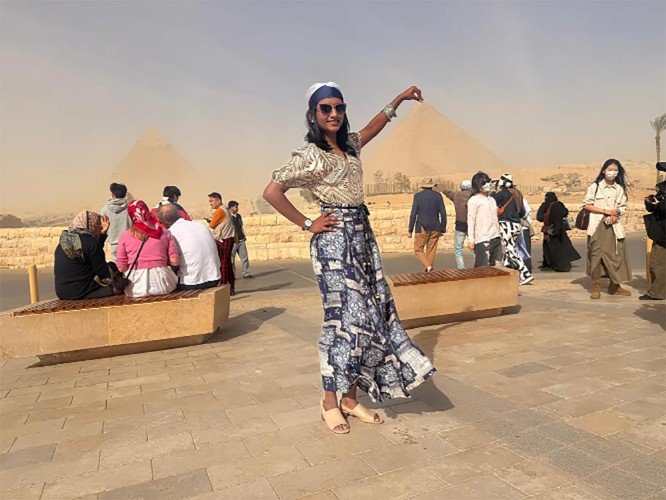
As a class ten student who had just passed her BGS/HSS exams, I had spent countless hours reading not only textbooks but also devouring the school library. Yet nothing in those books could make me more awestruck than witnessing a real-time sandstorm and the massive, kingly pyramids peeking through it. I felt charmed and warmed, but the weather seemed to say, “Don’t sweat – no matter how many layers of moisturizer you put on, you will still be dry.”
Cairo: Chaos and Charm
Cairo, the present-day capital, is a city of contrasts. You will find the latest models of vehicles, yet the dents on their bodies reveal poor driving etiquette. Towering flyovers stretch across the skyline, while simple brick-and-concrete buildings reflect earlier architectural styles. Toktoks, something between a rickshaw and a CNG, move through the streets, and overcrowded minivans serve as public transport. Yet, despite the bustle, the roads felt relatively traffic-free compared with Dhaka.
We stayed at the grand Nile Hilton, which offered us a clear view of the Nile. Every morning at breakfast, we watched the magnificent river flow calmly past the busy city.
Walking on the glistening sand of the Giza Plateau, I saw the timeless pyramids rising like guardians of history. Photos cannot truly capture their weathered limestone walls that have outlived empires. Standing for almost five thousand years, they still guard the secrets of ancient Egypt. Nearby, the Great Sphinx of Giza sat calmly upright, its eyes witnessing civilizations rise and fall.
Inside the museums, ancient Egypt came alive. The funerary gold masks, burial rituals, and offerings told stories of a remarkable civilization. The Grand Egyptian Museum, one of the largest archaeological museums dedicated to a single civilization, houses over 100,000 artifacts. We also visited the National Museum of Egyptian Civilization, which presents Egypt’s history from prehistoric times to the present and displays royal mummies in a special gallery.
But in Egypt, history is not limited to museums. The labyrinthine alleys of Khan el-Khalili smell of incense and tea. The vibrant market is full of life, with shopkeepers bargaining and lights glowing over colorful souvenirs. Old Cairo even reminded me of Old Dhaka – familiar in its rhythm of negotiation and laughter.
At night, we enjoyed a dinner cruise on the Nile with traditional food, music, and the energetic Tanoura dance performed by a man spinning in a colorful skirt.
…..(To be continued)