Bangladesh goes to historic polls
Published: 12 February 2026, 12:32:14
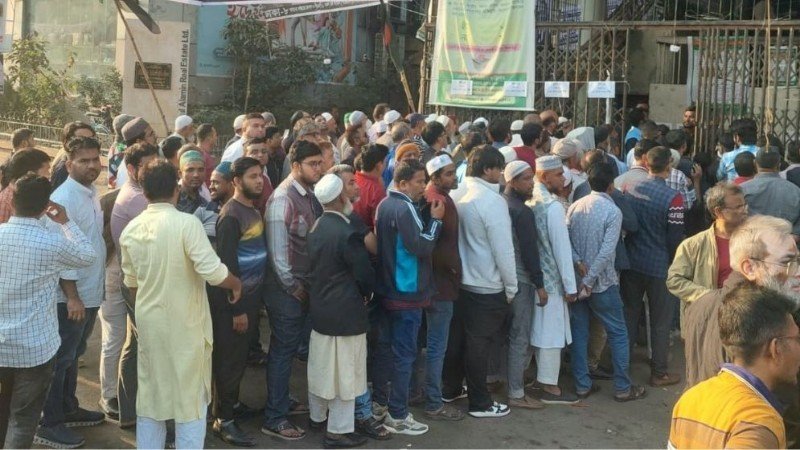
Bangladesh is voting today in its 13th parliamentary election, being held simultaneously with a referendum on the July National Charter, with renewed hope, anticipation, and a profound belief that the vote could mark the beginning of democratic renewal after years of political erosion.
Polling for the much-anticipated election began at 7:30am on Thursday and will continue uninterrupted until 4:30pm across 299 of the 300 constituencies, following the postponement of voting in one seat due to the death of a candidate.
However, election officials have been instructed to ensure that no voter is deprived of their right to cast a ballot due to time constraints.
There are 42,659 polling centres where voters will cast their ballots in person. In addition, postal votes will be counted at 299 centres, bringing the total number of polling centres to 42,958. Besides, 45,330 observers, including foreign ones, are monitoring the election.
A total of 2,028 candidates are contesting the polls from 50 parties, including 273 independent and 83 women contenders.
Candidate distribution shows 290 contenders from the Bangladesh Nationalist Party (BNP), 227 from Jamaat-e-Islami, 257 from Islami Andolan Bangladesh, 200 from the Jatiya Party, 32 from the National Citizen Party (NCP), and 94 from Gono Odhikar Parishad.
At the centre of the electoral contest is a battle of symbols – the BNP’s “Sheaf of Paddy” and the Jamaat’s “Scale” – representing rival political visions competing for control of the next parliament.
According to official figures, the country has 12.77 crore registered voters, including around 6.48 crore men, 6.28 crore women, and 1,232 hijra.
With nearly 4.9 crore voters aged under 35 – accounting for roughly one-third of the country’s total electorate– youth voters are expected to play a decisive role in determining outcomes in many constituencies.
The 13th national election carries particular significance, as it is being held under an interim administration formed after the mass uprising in 2024, following the ouster of the Awami League government led by Sheikh Hasina.
To maintain law and order, around 9.58 lakh members of law enforcement agencies have been deployed nationwide. Additionally, about 2,100 executive magistrates and 657 judicial magistrates are on duty to address any electoral or legal violations.
Besides, unmanned aerial vehicles are being used for the first time to monitor voting areas. Members of law enforcement agencies have been equipped with body-worn cameras, while more than 90% of polling centres are under CCTV surveillance.
The election is being managed by 69 returning officers, 598 assistant returning officers, 42,779 presiding officers, 247,482 assistant presiding officers, and 4,95,964 polling officers.