B’desh MPs may get greater freedom to vote under Article 70
Published: 24 October 2026, 9:22:57
Collected Photo
Bangladesh’s parliamentary members may be allowed to vote independently on most issues under proposed changes to Article 70 of the Constitution, except in four areas: money bills, confidence or no-confidence motions, constitutional amendments and national security matters.
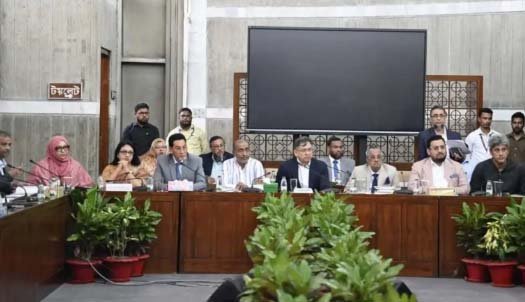
Home Affairs Minister Salahuddin Ahmed, who chairs the special committee on constitutional amendments, disclosed the proposal to journalists on Saturday after the committee’s ninth meeting at the National Parliament House.
The meeting brought together around 50 constitutional experts, including prominent lawyers, law professors and academics. They discussed a range of proposed reforms, including restoring the caretaker government system, establishing an upper house of parliament, ensuring judicial independence and amending Article 70.
Salahuddin described the latest discussion as productive, saying experts had offered detailed opinions on judicial review, judicial authority over administrative orders and different aspects of the constitutional framework.
He said the discussions focused on maintaining constitutional continuity and strengthening democratic institutions.
On restoring the caretaker government system, the minister said experts had presented several proposals concerning its formation, structure and scope. They also discussed whether an upper house could help resolve questions surrounding the formation of a caretaker government.
Some participants suggested that an upper house could facilitate an agreement between the ruling and opposition parties, potentially involving the Speaker or another neutral figure in shaping the caretaker government framework. However, no final decision was reached.
The committee will review the experts’ written submissions before preparing its final report, Salahuddin said.
Regarding Article 70, he said the proposed changes followed the framework outlined in the July National Charter. Under the proposal, lawmakers would be free to express their views and vote independently outside the four specified areas. Experts at Saturday’s meeting broadly supported the proposal, he added.
The committee is also reviewing proposals to establish a Supreme Court Secretariat and introduce a legal framework for judicial appointments to strengthen judicial independence.
On parliamentary standing committees, Salahuddin said the July National Charter reflects consensus on allocating the chairmanship of certain key committees to opposition lawmakers following constitutional reform.
Proposals have also been raised to make appointments to constitutional and statutory bodies more transparent, including through direct engagement with the President’s Office or a stronger institutional framework.
Asked about forming a constitutional reform council, the minister said current lawmakers had been directly elected by the people and sworn in under the Constitution. The special committee was continuing its work through established procedures, he said, adding that further steps on referendums and other political demands would follow constitutional and legal processes.