Living on dialysis: Patients share stories of survival
Published: 19 October 2026, 8:19:09
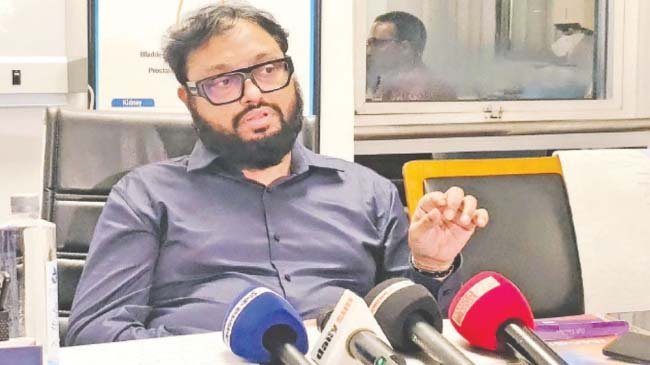
Professor Dr Ebadur Rahman, senior consultant in the Department of Nephrology at Evercare Hospital. Photo: Collected
For kidney patients in Bangladesh, regular dialysis has become a lifelong struggle for survival, with one woman undergoing the treatment for 17 years and two men continuing for nearly two decades. Their experiences highlight both the possibility of long-term survival on dialysis and the limited access to kidney care in the country.
Mariam Akter Lipi, 35-year-old Touhidul Alam and Aftab Uddin Ahmed have built their lives around regular hospital visits, medical complications and the discipline required to manage kidney failure, according to their accounts and a senior nephrologist at Evercare Hospital in Dhaka.
Seventeen years of dialysis
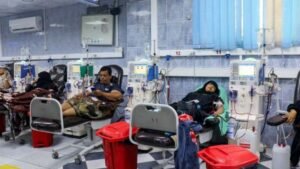
Lipi’s day begins at 4am, when her husband gets up to prepare her food, medicines and other necessities before taking her to hospital for dialysis. The treatment removes waste products and excess water from her blood, providing temporary relief before the cycle begins again.
Speaking to the media on Sunday, Lipi said she felt relatively well with dialysis twice a week.
Her kidney failure was caused by high blood pressure. She was admitted to hospital in 2009 in a critical condition and required life support before starting dialysis.
Recalling the first six months of treatment, she said she spent much of her time in hospital crying and longing for her newborn child, whom she had left at home.
Initially, she needed dialysis three times a week. The following year, she underwent a kidney transplant, spending around Tk7 lakh on the transplant package. However, the transplanted kidney failed to function, and she required another operation, taking the total cost to around Tk20 lakh.
She subsequently developed an infection that spread throughout her body within a week of the transplant. For nearly five months, her wounds had to be cleaned twice daily, and she received antibiotic injections. Importing specialised antibiotics from India cost a further Tk10 lakh to Tk15 lakh, but the transplanted kidney still did not function. She eventually returned to dialysis.
Long-term treatment and medication used during the transplant weakened her bones. Severe pain in her knees and thigh bones left her dependent on a wheelchair for a period. She has also experienced fluctuations in blood pressure and low blood sugar.
Growing up with kidney failure
Touhidul Alam, now 35, began dialysis at the age of 17 in 2007 after his kidneys failed because of a congenital condition called neurogenic bladder, which prevents the bladder from functioning normally.
He said he had grown up without properly experiencing what it meant to be healthy.
Touhidul has travelled to Singapore, Malaysia, Bangkok and India for treatment, but has found no permanent solution. Doctors have told him that unless his bladder condition is addressed, a transplanted kidney could also be damaged, leaving his prospects of transplantation uncertain.
Recalling the fear he experienced when dialysis began, he said he had been told that patients receiving the treatment did not live for more than three years. He later discovered that the person who had told him this had been receiving dialysis for four and a half years, changing his outlook.
Touhidul now attends hospital twice a week for dialysis. He said the sessions also give him opportunities to meet other patients, talk with them and share their joys and sorrows.
He believes regular treatment, following medical advice and maintaining a love for life can help patients make their lives meaningful despite chronic illness.
Five cardiac arrests, but he survived
Aftab Uddin Ahmed was diagnosed with kidney disease in 2007, when he was 36. He sought medical attention after experiencing loss of appetite, nausea and weakness, and tests revealed that both his kidneys had failed.
He began regular dialysis on 1 January 2008. Now around 56, he is a teacher originally from Gazipur and lives in Bashundhara Residential Area in the capital for easier access to treatment.
When asked why he had not undergone a kidney transplant, Aftab said concerns about the risks of transplantation and organ rejection at the time of diagnosis had led him to continue with dialysis.
He now requires dialysis three times a week, costing around Tk1 lakh a month.
During nearly 19 years of treatment, he has contracted Covid-19 and suffered five cardiac arrests. On each occasion, he survived with the help of cardiopulmonary resuscitation (CPR), intensive care and life support provided by doctors.
His wife, Kamrun Nahar Shiuli, who is also a teacher, was with him during a dialysis session at Evercare Hospital on Saturday evening.
Long-term survival remains uncommon
Professor Dr Ebadur Rahman, senior consultant and coordinator of the nephrology department at Evercare Hospital, shared the experiences of the three patients. A former regional adviser to the Royal College of Physicians of Edinburgh, he said long-term survival on dialysis remained uncommon in Bangladesh.
According to his experience, patients receiving dialysis in Bangladesh and worldwide survive for an average of five to seven years.
However, he said exceptional cases had survived for 18 to 20 years by maintaining proper hygiene, following meticulous lifestyle guidelines and adhering to medical advice.
He said successful dialysis depended on quality water purification systems, trained staff, advanced equipment and measures to prevent hepatitis B and C infections.
He also emphasised the importance of starting incremental dialysis when blood creatinine levels were between 4 and 6, rather than waiting until they reached 10 to 12, saying the approach could improve patients’ life expectancy and immunity.
Survival rates and the risks of missing treatment
A published study on dialysis patients in Bangladesh found survival rates of approximately 95 per cent after one year, 80 per cent after three years and 55 per cent after five years.
In India, the corresponding survival rates were 87.7 per cent after one year and 58.2 per cent after five years. Pakistan reported an average survival period of 28 months, while several South-east Asian countries recorded one-year survival rates of 70 to 94 per cent and five-year rates of 53 to 64 per cent. Japan recorded survival rates of 88 per cent after one year and 60 per cent after five years.
Dr Rahman said kidney disease often produced no clear symptoms in its early stages. In advanced cases, symptoms could include weakness, nausea, lethargy, itching, fluid retention, blood in the urine and painful urination.
Without dialysis, fluid could accumulate in the body and reach the lungs, elevated potassium levels could cause cardiac problems, and increased urea levels could lead to coma. He warned that when kidney function fell below five per cent, patients could die within one to three months without dialysis or other treatment.
Millions affected, treatment capacity limited
Bangladesh has no comprehensive national registry providing precise figures on the prevalence of kidney disease, the number of people who progress to end-stage kidney failure each year or how many receive regular dialysis.
Experts estimate that between two crore and three crore people in the country have some form of kidney disease.
A 2023 review titled Global Dialysis Perspective: Bangladesh estimated that 35,000 to 40,000 people reach end-stage kidney failure each year, of whom only 9,000 to 10,000 new patients receive dialysis services.
According to 2024 data from the International Society of Nephrology, kidney disease prevalence in the general population was 16 per cent in India, 14 per cent in Bangladesh, 12 per cent in Pakistan and 6 per cent in Nepal.
Dr Rahman estimated that around 20 per cent of Bangladesh’s population, or more than three crore people, had kidney disease. He said at least 100,000 patients had reached the stage of kidney failure requiring dialysis.
He attributed around 80 per cent of cases among older dialysis patients and other patients to uncontrolled diabetes, identifying high blood pressure, hereditary or congenital defects and kidney inflammation as other major causes.
Greater scope for transplantation needed
Dr Rahman said the success rate of kidney transplantation abroad could reach 98 to 99 per cent, although reliable data for Bangladesh were unavailable.
He called for greater opportunities for pre-emptive transplantation, which takes place before a patient needs dialysis.
He also suggested that Bangladesh could consider a regulated kidney donation programme under government supervision and financial support, similar to the system in Iran.
Referring to Saudi Arabia, he said 40 per cent of kidneys came from deceased donors. He stressed the need for surgical teams available around the clock, a suitable organ-matching database and a central organisation to facilitate organ donation from deceased people.
For Lipi, Touhidul and Aftab, however, survival continues to depend on regular treatment, medical support and the ability to endure the demands of a life organised around dialysis.