Disruption expected as six-day doctors’ strike begins
Published: 07 April 2026, 7:40:20
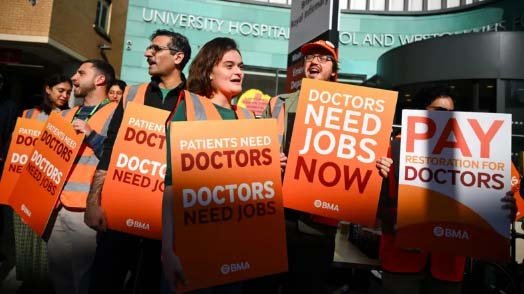
Resident doctors in England have begun a six-day strike, their 15th in a long-running dispute over pay.
The strike began at 07:00 BST on Tuesday and promises to cause significant disruption to services, with resident doctors (formerly called junior doctors) making up nearly half of the medical workforce in the NHS.
Senior medics are being drafted in to provide cover in emergency settings, but it means some pre-planned treatments and appointments are having to be cancelled.
The walkout by British Medical Association (BMA) members comes after talks between the government and doctors’ union broke down in March.
The NHS is urging patients not to put off seeking help if needed, saying those with emergency and urgent needs should use 999 and 111 as normal.
Those who have planned appointments and treatments scheduled should attend unless they are told otherwise. GP services are largely unaffected.
Health Secretary Wes Streeting told BBC Breakfast 95% of appointments were still in place and apologised to those affected by cancellations, saying they “deserve better”.
He said the government had negotiated with the BMA “in good faith” and criticised the decision not to accept its latest offer – calling resident doctors “by a country mile the best winners of the entire public sector workforce when it comes to pay rises”.
The government said the strikes were costing the NHS £50m a day, meaning the health service had lost around £3bn since industrial action started in March 2023 – but a detailed breakdown of costs has not been set out.
Despite receiving pay rises worth 33% over the past four years, the BMA argues doctors are still being paid a fifth less than they were in 2008 once inflation is taken into account.
Dr Jack Fletcher, chair of the BMA’s resident doctor committee, told BBC Radio 4’s Today programme he was “genuinely very sorry” to patients that had care postponed due to the strike, but noted that such delays also occurred “without strike action” because of a lack of specialists and GPs.
“The way out of this is to get around the negotiating table, as we were for eight or so weeks, talk constructively to get a deal, to get us out of this.”
Dr Emma Runswick, deputy chair of the BMA Council, told BBC Breakfast they had been close to reaching a deal but “the government decided to move the goalposts quite last minute to reduce the level of investment they were prepared to make”.
“That meant that the offer that they made was not one that we could put to members, we know that it will be rejected – and therefore we’ve had to call strike action once again.”
A Department of Health and Social Care spokesman said the government had offered resident doctors a “generous deal” and it was disappointing the BMA had pressed ahead with strike action.
“Our attention and that of leaders across the NHS is now on protecting patients, staff and our NHS by minimising disruption to the health service.”
Latest polling from YouGov suggests 53% of people oppose the strikes, with 38% supporting them.
Adrian Emery, 55 and from Nottinghamshire, is one of those affected. He was due to have a telephone appointment on Tuesday after having a number of mini strokes – or TIAs as they are known – in January. It has left him with hearing problems.
The appointment was meant to be his first follow-up to review his medication and talk to a specialist. It was initially rescheduled for mid June, but that has also been cancelled now. He does not know when he will be seen.
“I’m very worried, because my grandfather actually had a very serious stroke. I hope I don’t have a full stroke before I am seen,” he told BBC News.