What will happen to eight advisers?
Published: 07 March 2026, 3:43:17
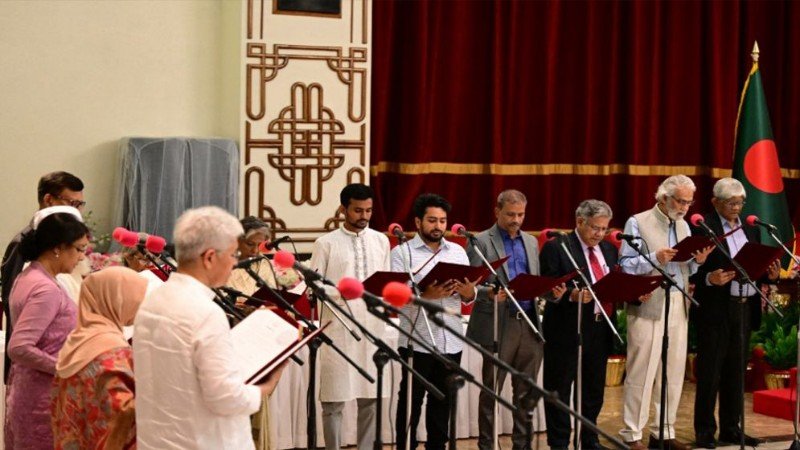
ABM Abdus Sattar, Principal Secretary to the Prime Minister, stirred significant debate in political and administrative circles last year after claiming that he possessed evidence of “massive corruption” involving eight advisers and two secretaries of the interim government. However, he did not disclose their names at the time.
When he made the allegation, Abdus Sattar was serving as the personal secretary to BNP Chairperson Begum Khaleda Zia. He now holds the powerful position of Principal Secretary to the Prime Minister, which gives him the authority to initiate legal steps against corruption. As a result, various quarters are now demanding that the names of the alleged corrupt officials be disclosed and that legal proceedings be initiated without delay.
Dr. Iftekharuzzaman, Executive Director of Transparency International Bangladesh (TIB), said that Abdus Sattar should have submitted evidence when he first made the allegation. If he has not done so, he should now provide the information to the Anti-Corruption Commission (ACC) and other relevant authorities.
Dr. Iftekharuzzaman added that Abdus Sattar currently holds one of the most important administrative positions in the country. Since he publicly accused advisers and secretaries of corruption in front of government officials, failing to prove the claims could raise serious questions. He also emphasized that the public has the right to know the truth and that the ACC should investigate the matter seriously.
On August 8 last year, while speaking at an event titled “Expectations of the July Mass Uprising and the Future of Public Administration” at the BIAM Auditorium in Dhaka, Abdus Sattar raised the issue of corruption among advisers. He said he never speaks without evidence and claimed that intelligence agencies had reports supporting his statements.
Expressing frustration, he said that no important appointment or transfer takes place without agreement from advisers. He also alleged that Tk 400 crore had been found in the bank account of the peon of one adviser and Tk 200 crore in the account of another adviser’s APS (Assistant Private Secretary). Despite these claims, he did not reveal the identities of the advisers involved.
In the same speech, Abdus Sattar questioned the competence of some advisers. In particular, he raised concerns about Nurjahan Begum, who was responsible for the Health Ministry, suggesting that someone inexperienced might not be suitable to manage such an important ministry. He also questioned the decision to assign the Local Government and Youth and Sports ministries to an inexperienced adviser.
Warning against corruption, Abdus Sattar said that future governments would have to sign the “July Charter,” and therefore officials should think carefully before engaging in corruption, as it could destroy both their personal and family lives.
He further remarked that, according to some observers, the amount of corruption during one year of the interim government had exceeded that of the previous 15 years. He claimed that he could present evidence of massive corruption by at least eight advisers who came to power after the July movement.
His remarks created strong reactions in political circles, with many demanding that the names of the eight advisers be disclosed. At the time, Dr. Iftekharuzzaman also urged the government to investigate the allegations and advised the accuser to submit documentary evidence to the appropriate authorities. However, there has been no visible progress in the matter since then.
The day after Abdus Sattar’s remarks, the government issued a statement signed by Cabinet Secretary Sheikh Abdur Rashid, rejecting the allegations as “baseless.” The statement said the government strongly rejected the claims made against unnamed advisers and urged that any evidence be submitted to the proper authorities.
Following the incident, BNP Secretary General Mirza Fakhrul Islam Alamgir also clarified in a statement that Abdus Sattar’s remarks were entirely his personal opinion and did not represent the party.
A member of the 1982 BCS administration cadre, Abdus Sattar was forced into retirement while serving as a Joint Secretary during the Awami League government. After the fall of that government, the interim administration promoted him to the rank of former secretary. Later, after the BNP-led government assumed power, he was appointed as the Prime Minister’s Principal Secretary on a contractual basis.
With Abdus Sattar now holding a key administrative position, his earlier allegations have resurfaced in public discussion. Many are asking whether the names of the eight advisers he accused will finally be revealed—and if credible evidence exists, whether an investigation or legal action will follow.
Attempts were made last night to contact Principal Secretary ABM Abdus Sattar by phone for comment, but he could not be reached.