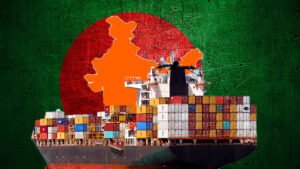
US tariff cut for India challenges Bangladesh exports
Published: 05 February 2026, 2:33:49
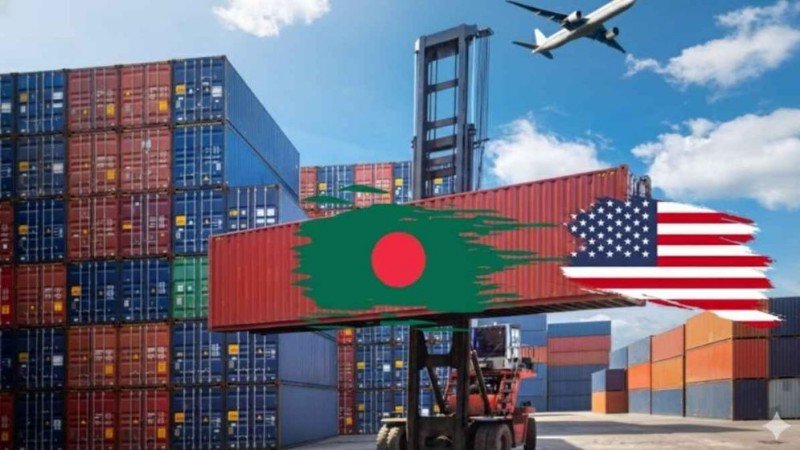
Bangladesh’s export sector has come under fresh pressure after the United States cut tariffs on Indian goods under a bilateral trade deal, following India’s free trade agreement with the European Union on 27 January.
The US reduced duties on Indian products to 18%, while Bangladeshi goods continue to face an effective tariff of 20%, widening the price gap between South Asia’s two major exporters.
Experts warn that the disparity could seriously affect Bangladesh’s readymade garment exports to the US market. Bangladeshi exporters now struggle to compete on price, putting orders for basic T-shirts, knitwear and casual apparel at risk.
Sector insiders say export growth has slowed for three consecutive months, while competitor countries gain advantages through global trade agreements.
The situation has created a new challenge for Bangladesh’s export sector, analysts say. They caution that the loss of GSP benefits in the European market after 2026 could deal a major blow to the country’s largest export destination.
They stress the need for urgent domestic reforms, stronger diplomatic engagement and improved trade strategies to protect export earnings and the wider economy.
Exporters note that even a 1–2 percentage point tariff difference can influence buyers’ decisions.
With lower US duties, India can offer more competitive prices, benefit from better access to raw materials and promise faster delivery. As a result, Bangladesh’s T-shirt, knitwear and casualwear orders face growing risks.
Garment industry leaders say factories now face two options: cut prices to retain orders or risk losing business.
Lower prices, however, would squeeze margins at a time when factories already face high production costs, gas and power shortages, and pressure from bank loans.
Former BGMEA director Mohiuddin Rubel said India signed nine major trade agreements between 2021 and 2026, strengthening its global export position, while Bangladesh has only one effective deal, with Bhutan, and another nearing completion with Japan.
Mohiuddin said India’s progress reflects long-term strategy, a complete textile and apparel ecosystem, strong infrastructure, skills development and higher value addition.
He urged Bangladesh to identify gaps and adopt long-term planning, including targeted FTA or CEPA strategies, investment in logistics and port efficiency, policy stability and skilled human resources.
BKMEA Executive President Fazle Ehsan Shamim said Bangladesh now faces a renewed competitiveness crisis as India’s reciprocal tariff stands at 18%. Under the current structure, Bangladeshi exporters pay a combined 35% duty—15% customs duty and 20 percent reciprocal tariff—compared with India’s lower burden.
He warned that exporters are losing global competitiveness as buyers push for lower prices and urged the government to step up diplomatic efforts and policy support to keep Bangladesh’s export sector competitive.